Iran in the Middle East: Strategic Depth, Regional Influence, and the Balance of Power
Iran’s role in the Middle East continues to be one of the most consequential and contested aspects of regional geopolitics. As a revolutionary state, regional actor, and strategic rival to both the United States and key Arab powers, Iran has developed a multidimensional foreign policy centered around deterrence, influence-building, and asymmetric engagement. In 2025, Iran's activities in the region reflect a mature, adaptive strategy that balances hard power, diplomacy, and economic necessity.
This article offers an in-depth analysis of Iran’s regional activities, including its proxy network operations, military posture, strategic signaling, and economic and diplomatic considerations. It also examines recent shifts—particularly in relation to Gulf states, the U.S., and Iran’s ties to non-Western powers.
1. Proxy Networks: The Foundation of Iranian Regional Influence
Since the 1980s, Iran has cultivated and sustained a sophisticated network of non-state actors across the Middle East. These groups act as force multipliers, enabling Iran to exert influence far from its borders without direct confrontation.
Lebanon: Hezbollah
Hezbollah remains Iran’s most significant and capable proxy. With approximately 3,000 trained fighters and a vast arsenal of precision-guided missiles, Hezbollah is central to Tehran’s deterrence strategy against Israel.
- Annual Support: Estimated between $700 million and $1 billion.
- Arms Transfers: Operated by the Quds Force, particularly Units 700 and 190, facilitating the flow of advanced missiles and drones from Iran to Lebanon, often via Syria.
Iraq: Popular Mobilization Forces (PMF)
Iranian-backed Iraqi militias such as Kataib Hezbollah and Harakat al-Nujaba serve as both political and military tools.
- Activity Spike: Since October 2023, over 170 attacks have been carried out by Iran-backed militias on U.S. bases in Iraq, Syria, and Jordan.
- Recent Shift: In May 2025, no attacks were reported—marking a possible shift in Tehran’s strategic calculus or a tactical pause amid negotiations and international pressure.
Yemen: The Houthis
Iran has supplied the Houthi movement with drones, cruise missiles, and training.
- Red Sea Campaign: Between late 2023 and 2024, Houthis launched 130+ missile and drone strikes on commercial shipping. The campaign disrupted global trade and inflicted an estimated $200 billion in economic damage globally.
Syria: Strategic Corridor
Iran maintains a strategic military and logistical presence in Syria, serving as a land bridge to Hezbollah in Lebanon and a deterrent against Israeli and U.S. interests.
2. Iran’s Military Modernization and Power Projection
Iran’s military strategy increasingly emphasizes asymmetric warfare, long-range strike capabilities, and strategic deterrence.
Missile and Drone Capabilities
- Range: Ballistic missiles now reach up to 2,000 km; drones reportedly capable of 2,500 km range.
- Recent Developments (2025): Iran unveiled new missile types carrying 2-ton warheads, a possible symbolic warning to Israel and U.S. regional assets.
Naval Strategy
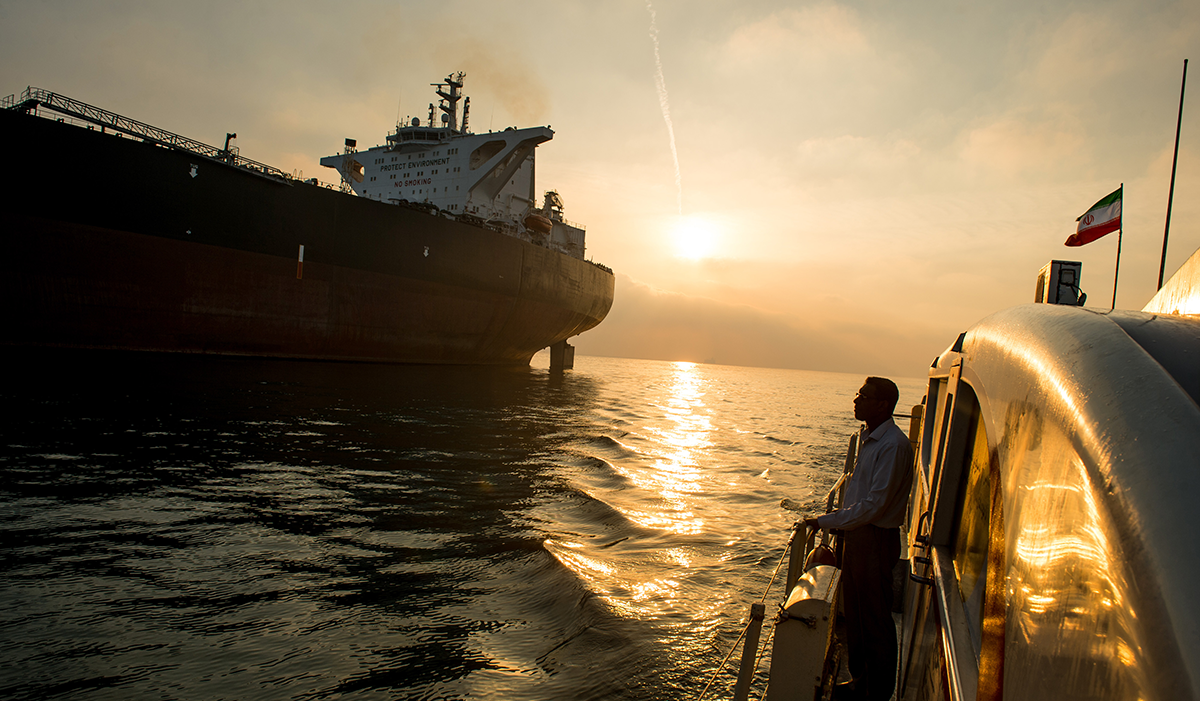
- February 2025 – Exercise Zolfaghar 1403: Iran conducted joint drills in the Persian Gulf and Sea of Oman, simulating attacks on enemy warships using missiles and drones.
- March 2025 – Joint Drills with China and Russia: Iran hosted maritime exercises near the Strait of Hormuz, signaling alignment with global powers outside the Western bloc.
3. Strategic Signaling and Deterrence
Iran routinely uses rhetoric and strategic posturing to deter adversaries and communicate resolve.
- Explicit Threats: In June 2025, Iran warned that U.S. bases in Iraq, Bahrain, and possibly Diego Garcia would be targeted in any major military escalation.
- Red Sea Tensions: The Iranian Navy has increased its patrols and surveillance operations in the Arabian Sea and Gulf of Aden, signaling its ability to project force beyond its immediate borders.
4. Economic Constraints and Proxy Sustainability
Oil Revenue and Sanctions
- Sanctions Impact: From 2016 to 2024, Iran’s daily oil exports dropped by over 615,000 barrels/day—a key source of revenue for proxy support.
- Adaptations: Iran has increasingly turned to informal markets, crypto transfers, and third-party brokers to fund operations and maintain external networks.
Strain and Sustainability
Despite growing economic pressure, Iranian support for proxies remains resilient. Intelligence reports confirm continued arms shipments and cash transfers, although there are signs of financial strain in less strategically vital areas.
5. Diplomatic Engagement and Realignment
Gulf Détente
- 2023: China-Brokered Iran–Saudi Deal: Re-establishment of diplomatic ties between Iran and Saudi Arabia marked a strategic recalibration.
- Outcomes: Reduction in regional rhetoric, lowered risk of open conflict in Yemen, and potential for broader Gulf de-escalation.
Beyond the West
Iran is increasingly aligning with non-Western powers:
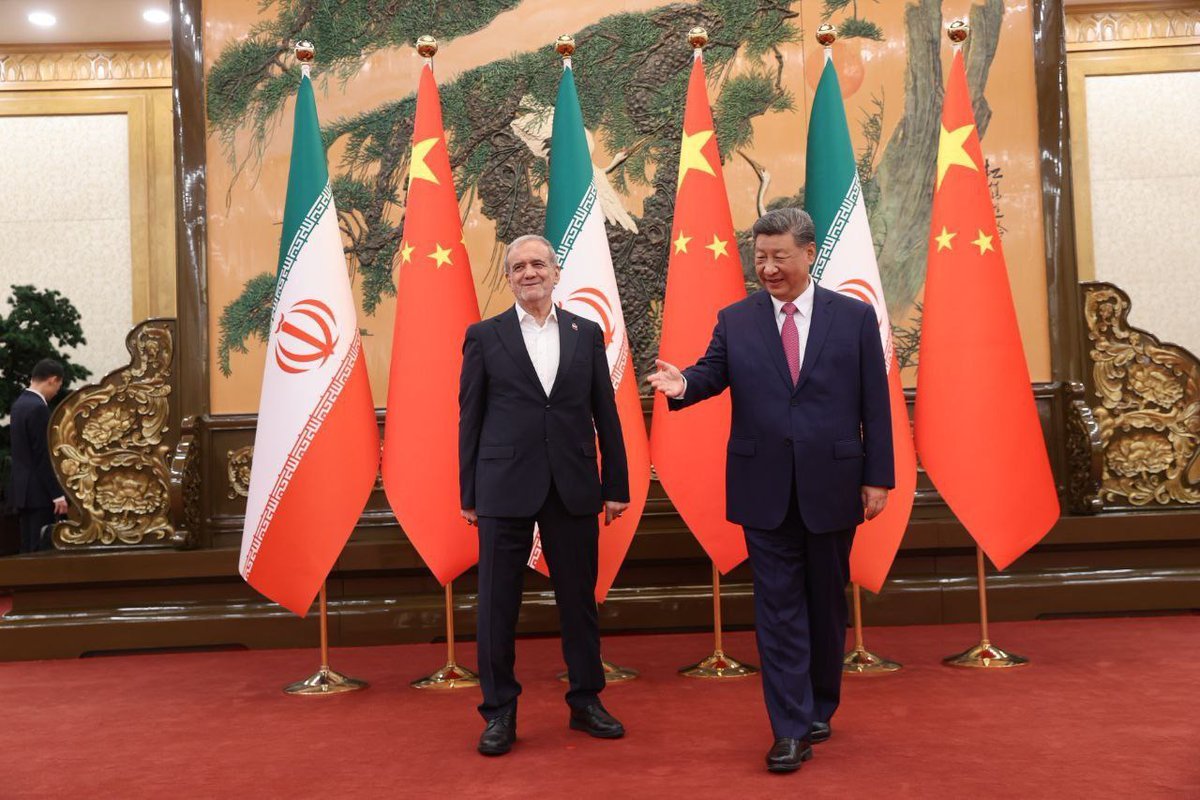
- China: A 25-year cooperation agreement includes infrastructure investments and energy purchases.
- Russia: Coordination in Syria, military technology exchange (including Iranian drones used in Ukraine), and naval drills solidify a tactical partnership.
6. U.S. Presence and Regional Shifts
Iran has successfully pressured the U.S. presence in the region:
- Recent Developments: In June 2025, reports emerged of partial U.S. military withdrawals or redeployments, particularly in response to Iranian proxy threats in Iraq and Jordan.
- Public Messaging: Iranian state media, military leaders, and political figures emphasize that Tehran's strategic patience is limited—while reinforcing a narrative of deterrence and resistance.
Conclusion: Strategic Reach, Tactical Flexibility
Iran’s Middle East strategy is built on a combination of:
- Deep-rooted ideological commitment to opposing U.S. and Israeli influence.
- Operational flexibility, using non-state actors to shape conflicts without direct intervention.
- Strategic patience, enabling Iran to adapt to sanctions and shifting political landscapes.
Yet, risks remain high. Escalations with Israel, a breakdown in nuclear diplomacy, or renewed U.S. confrontation could trigger broader regional conflict. However, Iran’s actions in 2025 show a sophisticated, if risky, balancing act: projecting power while seeking space for tactical diplomacy.
Key Figures at a Glance (2023–2025)
| # | Metric | Estimate |
|---|---|---|
| 1 | Hezbollah funding (annual) | \$700 million – \$1 billion |
| 2 | Red Sea Houthi attacks | 130+ strikes |
| 3 | U.S. bases targeted by proxies | >170 incidents |
| 4 | Oil export reduction (2016–2024) | ≈615,784 barrels/day |
| 5 | Iran missile range | Up to 2,000 km |
| 6 | Iran drone range | Up to 2,000 km |