The Socio-Cultural Impacts of Lake Urmia’s Drying
Introduction
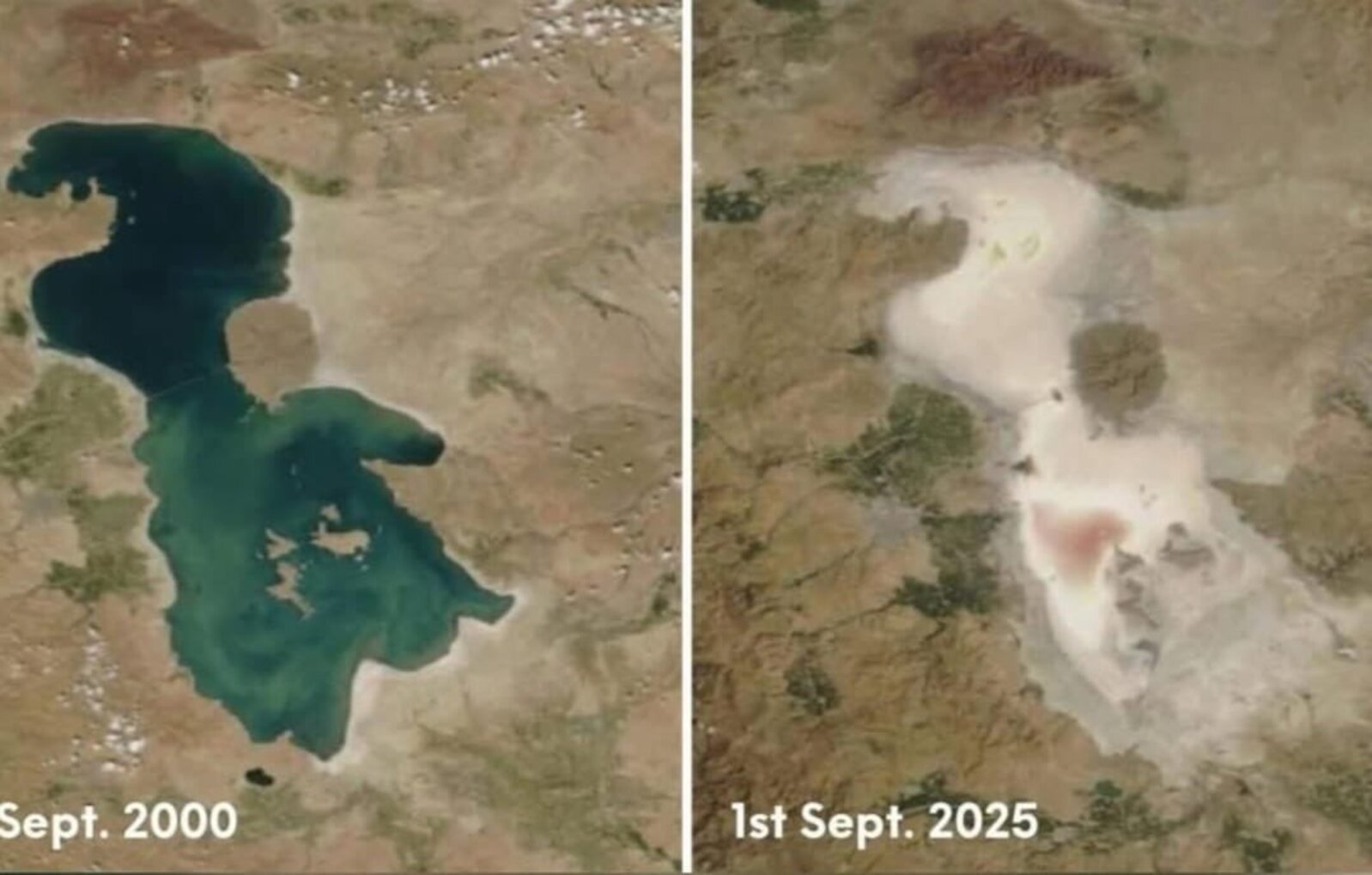
The drying of Lake Urmia—once the largest saltwater lake in the Middle East—represents a complex environmental crisis shaped by both human activities and climatic changes. Key drivers include unsustainable water management practices such as inefficient irrigation, excessive groundwater extraction, and dam construction, all of which have significantly disrupted the lake’s hydrological balance. These interventions, along with declining precipitation and rising temperatures, have led to biodiversity loss, soil salinization, and economic decline in surrounding communities. Beyond its ecological impact, the lake’s desiccation has triggered cultural and political tensions, particularly among Iran’s Azerbaijani Turk population, for whom Lake Urmia holds symbolic significance. As such, the crisis is increasingly viewed not only as an environmental issue, but also as a matter of cultural identity and regional stability.
1. Causes of the Drying of Lake Urmia
The drying process of Lake Urmia is not attributable to a single cause; rather, it is the result of the interplay of multiple factors, among which human-induced water management errors have emerged as the most prominent. Within the basin, increasing irrigation demands, the predominant use of water for agricultural purposes, and the widespread application of inefficient irrigation techniques have significantly reduced the flow of water reaching the lake. Additionally, the excessive extraction of groundwater has disrupted the natural hydrological balance, weakening the lake’s sources of water replenishment. According to expert evaluations, anthropogenic factors have become the most decisive contributor to the lake's desiccation.
Another critical factor is the construction of dams and the alteration of river flow regimes. Dams built on the rivers feeding into Lake Urmia have considerably restricted the volume of water reaching the lake. These engineering interventions have disrupted the natural flow patterns and negatively impacted the lake’s water budget. In addition to dams, the redirection of river courses and the diversion of water through irrigation canals have led to losses in the lake’s natural inflow processes. This situation has not only lowered the lake’s water level but has also weakened the interconnected natural cycles within the lake’s ecosystem.
Moreover, one of the factors accelerating the drying process is the construction of the so-called "Lake Urmia Highway" a causeway that cuts across the lake. While this road connects the northern and southern parts of the lake, it has disrupted natural water circulation. Due to insufficient bridge openings and culverts, water flow between the eastern and western arms of the lake has been obstructed. As a result, disparities in water level and salinity have emerged between the two sides, with reports indicating faster water withdrawal and increased salt accumulation particularly on the western side.
Climatic factors also play a significant role in accelerating the lake's desiccation. Long-term declines in precipitation, rising temperatures, and increased evaporation rates have further destabilized the lake's water balance. In particular, heightened evaporation during the summer months has rendered much of the already limited inflow ineffective. Additionally, changes in land use have exacerbated the situation. The rapid expansion of agricultural lands, coupled with the reduction in forest and grassland cover, has led to decreased soil infiltration of rainfall. This, in turn, has increased erosion and sediment accumulation, ultimately reducing the lake’s storage capacity. The convergence of all these factors has resulted in dramatic declines in the water level of Lake Urmia.
2. Environmental and Economic Impacts
2.1. Environmental Impacts
- Biodiversity and Food Webs: The decline in endemic Artemia populations in Lake Urmia has disrupted the feeding patterns of migratory bird species, while the retreat of the lake has led to habitat fragmentation.
- Salt-Dust Storms (Aerosol Load): Saline particles carried from the dry lakebed deteriorate air quality and pose serious threats to vegetation, soil health, and human well-being.
- Soil Salinization and Land Degradation: The scarcity of irrigation water and accumulation of surface salts have resulted in severe salinization of agricultural lands, leading to significant losses in crop productivity.
2.2. Economic Impacts
- Decline in Rural Livelihoods: Decreases in employment, income, and productivity indicators have been documented in academic studies, alongside rising poverty and unemployment.
- Migration Pressure and Demographic Imbalance: Salt-dust storms, water scarcity, and loss of income are driving increased social mobility, resulting in demographic imbalances across the region.
3. Cultural Impacts of the Lake’s Drying
Lake Urmia holds significance not only as a natural asset but also as a powerful symbol of collective memory, regional identity, and local discourse for the Turkic population of the Azerbaijan region in Iran. This symbolic function is deeply embedded in daily cultural-touristic practices such as birdwatching, shoreline excursions, and coastal festivals. As such, the lake's desiccation is increasingly perceived by the local population as a profound cultural loss.
Furthermore, the issue of Lake Urmia has become a sensitive topic for the Iranian regime, both in terms of domestic stability and international image, particularly regarding its approach toward the Azerbaijani Turk population. Some analyses suggest that the government's insufficient response—or perceived passivity—regarding the lake's drying has been associated with broader demographic transformation strategies. Allegations of ethnic repression or population displacement in the region are being discussed within the framework of this environmental crisis. In this sense, the lake crisis has become a symbolic focal point in Iran-Azerbaijan relations. In Azerbaijani public discourse, the desiccation of Lake Urmia is frequently portrayed as the “loss of a shared heritage,” carrying the potential to generate international pressure at both diplomatic and environmental levels. Notably, Mukhtar Babayev, Azerbaijan’s Presidential Envoy for Climate Affairs, emphasized in May 2025 that the Caspian Sea must not be allowed to follow the ecological trajectory of Lake Urmia and the Aral Sea, drawing attention to the broader threat of regional water crises.
Additionally, the Lake Urmia issue bears implications for the political dynamics concerning pro-Turkic communities within Iran. Local protests against the lake’s desiccation have increasingly taken on ethnic and identity-based dimensions beyond environmental concerns, thereby triggering securitized responses from the central government. The local population’s articulation of identity and belonging through the lake has transformed the environmental issue into an ethno-political one. This has led the state to perceive such demands as "separatist" or aligned with “identity politics.” Indeed, international reports suggest that the social mobilization around Lake Urmia could be used as a pretext for intensified political and cultural repression against Iran’s Azerbaijani Turk population. Thus, the lake’s ecological crisis is not merely an environmental issue; when intersected with identity claims, it becomes a potential instrument for the intensification of state repression against Turkic political movements.