Energy Resources in the Middle East: Wealth, Dependency, and the Road Ahead
The Middle East holds a paradox at its core: it is one of the richest regions in terms of energy resources, yet one of the most vulnerable to their long-term consequences. For over a century, oil and gas have defined the region’s economies, shaped its political systems, and fueled both development and conflict. In 2025, as the world accelerates toward energy diversification and climate commitments, the Middle East faces a critical juncture: evolve or fall victim to its own dependence.
This article provides a critical and realistic assessment of the Middle East’s energy resources, examining their economic importance, geopolitical influence, structural risks, and uncertain future.
1. The Energy Giants: A Statistical Snapshot
The Middle East holds approximately 48% of the world’s proven oil reserves and 38% of global natural gas reserves. The top producers include:
| # | Country | Oil Production (barrels/day, 2024 est.) | Natural Gas (bcm/year) | OPEC Member |
|---|---|---|---|---|
| 1 | Saudi Arabia | \~10.2 million | \~120 bcm | Yes |
| 2 | Iran | \~3.2 million | \~270 bcm | Yes |
| 3 | Iraq | \~4.5 million | \~10 bcm | Yes |
| 4 | UAE | \~3.5 million | \~60 bcm | Yes |
| 5 | Qatar | \~1.5 million | \~175 bcm (LNG leader) | No (quit OPEC in 2019) |
While these numbers place the region at the heart of global supply chains, they also mask deep structural imbalances and growing strategic risks.
2. The Curse of Dependency: Economic Vulnerabilities
Despite decades of wealth, most Middle Eastern oil producers remain structurally dependent on hydrocarbons, often accounting for 70–90% of government revenue. This reliance exposes them to:
- Price volatility: Global oil prices fluctuate due to political crises, demand shifts, and technological disruption. The 2020 oil crash and 2022–23 price spikes due to war and sanctions highlight this instability.
- Budgetary fragility: Many Gulf states require oil prices above $70–$80/barrel to balance their budgets. Prolonged low prices can lead to deficits, cuts to public services, and social discontent.
- Unemployment and stagnation: Youth unemployment in the region remains high—above 25% in some states—despite vast state spending, suggesting limited economic diversification.
Iran’s case is illustrative. Sanctions have forced Tehran to rely on a shadow energy economy, exporting discounted oil to Asian markets, while investment in new fields and infrastructure has stagnated. Revenue from hydrocarbons sustains the regime, but lacks the growth engine needed for domestic stability.
3. Resource Control and Regional Tensions
Energy is not merely economic—it is a driver of regional rivalry and political power.
- Territorial disputes: The Iran-UAE disagreement over the Abu Musa and Tunb islands involves potential offshore oil fields. Similar tensions exist in the eastern Mediterranean between Israel, Lebanon, and Turkey over maritime gas rights.
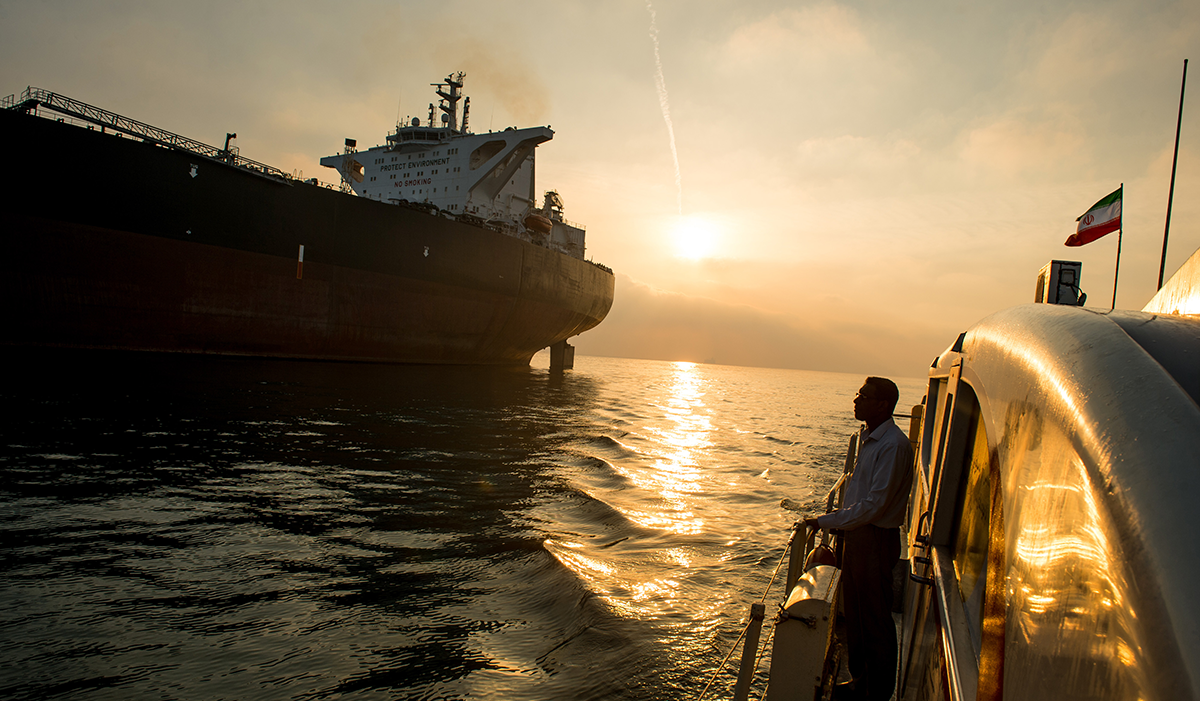
- Energy as leverage: Iran has threatened to block the Strait of Hormuz, through which 20–30% of global oil transits daily, during periods of confrontation. In Yemen, Houthi attacks on Red Sea shipping in 2024–25 demonstrated how energy infrastructure is weaponized.
- Pipeline politics: Competing visions—like Iran’s proposed overland routes to Iraq, Pakistan, and India versus Saudi-backed alternatives—highlight the strategic role of energy corridors.
These frictions make energy infrastructure high-risk—economically essential but politically fragile.
4. The Green Energy Transition: A Looming Threat
The global push toward decarbonization and net-zero targets poses a longer-term existential challenge to hydrocarbon-reliant states.
- EU and U.S. decarbonization policies: By 2030, the EU plans to reduce fossil fuel imports by at least 55%. The U.S. Inflation Reduction Act has also redirected investment toward renewables, batteries, and hydrogen.
- Technology cost curves: Solar, wind, and green hydrogen costs are falling, making them more competitive even in energy-exporting regions. Saudi Arabia and the UAE have invested heavily in renewables—but mainly for global optics rather than true structural transition.
Iran lags behind in this transition. Limited foreign investment, technological sanctions, and internal mismanagement have prevented large-scale renewable adoption. In contrast, Qatar, with its focus on liquefied natural gas (LNG), has positioned itself as a transitional fuel supplier—but even this role is time-limited.
5. Nationalism, Control, and Corruption
Oil wealth has long supported centralized political control, enabling regimes to maintain loyalty through subsidies, public jobs, and surveillance. However, this rentier model has also fostered:
- Corruption: Mismanagement of state energy companies—like Iraq’s SOMO or Iran’s NIOC—results in lost revenues and inefficiency.
- Inequality: Wealth is often concentrated in elite hands, particularly in monarchies and authoritarian systems, with limited trickle-down benefits.
- Social unrest: When oil income dips or subsidies are cut, protests erupt—as seen in Iran (2019) and Iraq (2019–2020).
The illusion of limitless oil money has long deferred difficult reforms. That window is now narrowing.
6. The Future: Choices and Constraints
The Middle East faces three strategic paths:
- Diversify economies meaningfully: Countries like the UAE and Saudi Arabia are investing in tourism, technology, and services—but these sectors remain minor compared to oil exports.
- Modernize energy sectors: Investing in carbon capture, clean fuels, and domestic renewables could soften future shocks. Iran, however, lacks the capital and partnerships to lead this transition.
- Exploit energy leverage while it lasts: States may double down on oil and gas exports in the short term—especially as conflict in Ukraine and Asia tightens global markets.
Conclusion: The End of the Oil Mirage?
The Middle East’s energy wealth has enabled decades of influence, infrastructure, and survival—but it has also bred fragility, complacency, and risk. In an era of climate urgency, technological disruption, and geopolitical uncertainty, the energy map is changing faster than the region’s policies.
For Iran and its neighbors, the challenge is clear: turn oil into a bridge to economic and political resilience—or remain locked in a cycle of dependency, vulnerability, and diminishing returns.